Paleo Vs Whole30: What is the difference?

Kelli • August 31, 2020

Paleo Vs Whole30: What is the difference?

While we are not here to tell you what healthy diet is the best for you, we want to provide you the information on several common ones so you can choose what the best is for you and your lifestyle.  Many CrossFitters have tried or at least heard of Paleo – “the Caveman’s Diet” And recently Whole30 has emerged in mainstream America.  Below are details on both of these healthy living diets and the slight differences in them.


Paleo:

The Paleo diet is a modern attempt to replicate the diet of humans during the Paleolithic / Caveman age.  These ancient hunter-gathers lived before the advent of agriculture and lived on lean proteins (such as fish, venison and poultry), eggs, fruit, vegetables, nuts and roots.  This diet has been around since the 1970s and was started by a gastroenterologist Walter Voegtlin.  The diet was then popularized by Dr. S. Boyd Eaton, a professor of anthropology at Emory University; in 1998 he wrote the book “The Paleolithic Prescription.” Eaton’s claim to the diet is that humans are ill-suited to modern diets because the large part of a human’s genetic makeup was established thousands of years ago in pre-agricultural societies.  He believes that many modern diseases are a result of today’s eating habits. It has since then been in the CrossFit arena through Robb Wolfe – if you enjoy podcasts, he holds very informative podcasts on healthy lifestyles!

The Paleo diet focuses on avoiding all processed foods such as grains, cane sugar, legumes (lentils, beans, peanuts and peas), potatoes and dairy products.  All fruits and vegetables must be organic and salt must be limited.

Benefits:


Risks:

  • Imbalanced diet
    • Requires a large amount of meat which could lead to excess consumption of saturated fat and cholesterol
    • Lacking fiber, vitamins and minerals that come from grains and dairy products
      • E.g. iron, zinc, calcium, folate, thiamine, riboflavin, niacin, vitamin B12 and phosphorus

FOODS TO AVOID

FOODS ALLOWED

Grains, such as wheat, oats and barley Fruits
Legumes, such as beans, lentils, peanuts and peas Vegetables
Dairy products Nuts and seeds
Salt Lean meats, especially grass-fed animals or wild game
Highly processed foods Pasta (including whole-wheat and gluten-free) E.g. Beef (grass Fed) lamb, pork, veal, bacon (nitrate-free), Chicken (free-range preferred), Turkey, Quail, Goose
Potatoes Game Meat: Bear, Moose, Rabbit, Duck, Elk, Deer
Bread Fish (Wild-Caught Preferred)
Rice Shellfish (Wild-Caught Preferred)
Oats Nuts: Almonds, Cashews, Macadamia nuts, Hazelnuts, Brazil Nuts, Walnuts
Quinoa Oils from fruits and nuts, such as olive oil or walnut oil
Beans, lentils, and peanuts Almond butter (free of sugar and artificial sweeteners)
Refined vegetable oils Chia seeds
Refined sugar: white and brown sugars, agave, corn, syrup, artificial sweeteners, candy Natural Oils: Olive oil, Avocado oil, Coconut oil, Butter , Ghee, Tahini oil
Soy Natural Sweeteners: Coconut sugar, Date Sugar, Raw Honey Maple syrup
Corn Water
Potatoes Herbal and matcha tea (in moderation)
Processed foods including frozen or processed dinners, packaged foods and snacks Coconut water
Salty foods Bone broth
Soda Unsweetened sparkling water (no natural or artificial sweeteners)
Drinks sweetened with artificial sweeteners Black coffee (in moderation)
Wine Kombucha
Beer Low-sugar hard cider (occasionally and in moderation)
Peanuts Gluten-free spirits (occasionally and in moderation)
Peanut butter

*Note those Italicized and Bold   on the chart are also excluded on the Whole30 diet and should be avoided

Paleo Resources:


Whole30:

The Whole30 is a 30-day diet emphasizing whole foods and the elimination of sugar, alcohol, grains, legumes, soy and dairy.  It is similar to but more restrictive than the Paleo diet, as adherents may not eat natural sweeteners like honey or maple syrup.  The program was created by wife and husband Melissa and Dallas Hartwig in April 2009.  They co-authored “It Starts with Food (2012)” and “The Whole30: The 30-Day Guide to Total Health and Food Freedom (2015).” Melissa then went on to write “Food Freedom Forever: Letting Go of Bad Habits, Guilt, and Anxiety around Food (2016).”  Currently there is no studies/research that specifically looks into the health impacts of the Whole30.  However, due to the similarities with Paleo, if Whole30 is taken from a 30 day program to a change in overall lifestyle that is ongoing, the research for Paleo could be expounded to cover Whole30.  The largest criticism of this diet is that it is extremely restrictive and quick response in 30 days does not set someone up for a sustained change in lifestyle.  Dietitian Meridan Zemer said “we want behavioral changes and dietary changes that are slow and progressive and meaningful.”

  • Note the Chart above of Foods to Avoid and Foods Allowed – those highlighted in yellow are not allowed under Whole30. And Whole30 takes it another step with these rules below:

UNDER WHOLE30 ALSO AVOID:

Do not consume added sugar, real or artificial.  This includes (but is not limited to) maple syrup, honey, agave nectar, coconut sugar, date syrup, monk fruit extract, stevia, Splenda, Equal, NutraSweet, and xylitol. If there is added sugar in the ingredient list, it’s out.
Do not consume alcohol, in any form, not even for cooking.  (And ideally, no tobacco products of any sort, either.)
Do not eat grains.  This includes (but is not limited to) wheat, rye, barley, oats, corn, rice, millet, bulgur, sorghum, sprouted grains, and all gluten-free pseudo-cereals like quinoa, amaranth, and buckwheat. This also includes all the ways we add wheat, corn, and rice into our foods in the form of bran, germ, starch, and so on. Again, read your labels.
Do not eat most forms of legumes.  This includes beans (black, red, pinto, navy, garbanzo/chickpeas, white, kidney, lima, fava, cannellini, lentils, adzuki, mung, cranberry, and black-eyes peas); peanuts (including peanut butter or peanut oil); and all forms of soy (soy sauce, miso, tofu, tempeh, edamame, soy protein, soy milk, or soy lecithin).
Do not eat dairy.  This includes cow, goat, or sheep’s milk products like milk, cream, cheese, kefir, yogurt, sour cream, ice cream, or frozen yogurt.
Do not consume carrageenan, MSG, or sulfites.  If these ingredients appear in any form on the label, it’s out for the Whole30.
Do not consume baked goods, junk foods, or treats with “approved” ingredients.*  Recreating or buying sweets, treats, and foods-with-no-brakes (even if the ingredients are technically compliant) is missing the point of the Whole30, and won’t lead to habit change. These are the same foods that got you into health-and-craving trouble in the first place—and a pancake is still a pancake, even if it’s made with coconut flour.
Do not step on the scale or take any body measurements for 30 days.  The Whole30 is about so much more than weight loss, and to focus only on body composition means you’ll overlook all of the other dramatic, lifelong benefits this plan has to offer. So no weighing yourself, analyzing body fat, or breaking out the tape measure during the 30-day elimination period. (You may take photos and/or measurements on Days 0 and 31, however.)


Whole30 Resources:

Recent Posts

By Kelli May 31, 2022
The post 2022 Memorial Day Murph Challenge appeared first on CrossFit Sea Dog.
By Kelli April 10, 2022
Woah! We’re still in awe of all of the support, fun, athleticism, and community engagement we experienced at this year’s SeaDog Summer Showdown. We can’t thank this community enough! The weekend was epic! We’ve appreciated all of the feedback we’ve received about the event and we’re working on making next year’s event even better than... View Article The post PHOTOS: SeaDog Summer Showdown 2022 appeared first on CrossFit Sea Dog.
A colorful, grid-based chart, possibly a schedule or timeline, with various colored horizontal bars and text within each cell.
By Kelli March 30, 2022
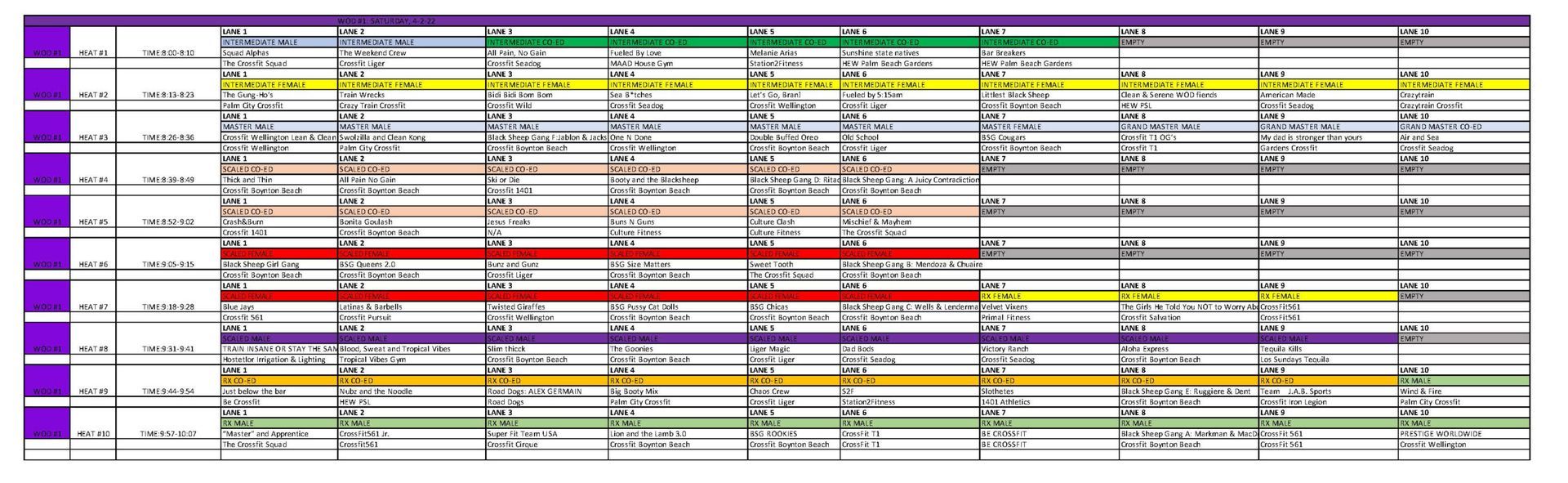
SeaDog Showdown Heats – Click text to download The post SeaDog Summer Showdown 2022 Heats appeared first on CrossFit Sea Dog.

Cartoon of a man in athletic wear stretching his leg.
By Kelli October 2, 2020
Benefits of Stretching and Mobility   Stretching should be part of your daily routine, whether you exercise or not. It does not have to involve a huge amount of time, but stretching can end up having huge results. Benefits of Stretching Before and After Exercise: Reduce muscle tension and helps the body feel relaxed Avoid... View Article The post Benefits of Stretching and Mobility appeared first on CrossFit Sea Dog.

Two overlapping head silhouettes, one blue, one pink, filled with the words
By Kelli September 27, 2020
Mental Health Stress/Anxiety Relief                During these unprecedented times, the nation has seen a significant rise in mental health concerns including but not limited to, depression, stress, anxiety, etc. We have all experienced our own personal challenges related to our changes in our schedules, changes with our job status, and increased time at home with... View Article The post Mental Health appeared first on CrossFit Sea Dog.

Various fruits and vegetables pouring into a capsule, symbolizing health supplements.
By Kelli September 20, 2020
Supplements  How Can They Benefit?                Do you feel overwhelmed when walking into a supplemental store and having no idea where to begin, but know you are sore after workouts and need something to assist with your training regimen? Well, we want to help…below is beginning basic knowledge for various types of supplements.  If you... View Article The post Supplements – How Can They Benefit appeared first on CrossFit Sea Dog.

Blue thought bubble with
By Kelli September 13, 2020
Adequate Sleep How to Accomplish?                Through research it is recommended the average adult needs to get 7 to 8 hours of sleep. Due to hectic lives of modern technology, this can be difficult.  However, it is just as important to develop a schedule of adequate sleep time as it is to eat healthy and... View Article The post Are you Getting Adequate Sleep?! appeared first on CrossFit Sea Dog.
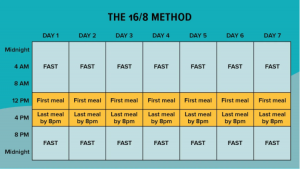
Diagram illustrating the 16/8 intermittent fasting method: daily 16-hour fasting with an 8-hour eating window.
By Kelli September 9, 2020
Intermittent Fasting and Macro Tracking Last week we discussed Paleo vs Whole30 diets.  And while we are not here to tell you what healthy diet is the best for you, we want to provide you the information on several common ones so you can choose what the best is for you and your lifestyle.  This... View Article The post Intermittent Fasting and Macro Tracking appeared first on CrossFit Sea Dog.

Text on a blurred forest background reads:
By Kelli August 25, 2020
Where to Start, How to Start Healthy Living?! Whether you are starting from scratch or trying to get back on track, it can be overwhelming to know where to begin to set yourself up for success in becoming healthy.  First thing you need to do is to set your own personal goals of what you... View Article The post Nutrition/Wellness Challenge: Where to Start? appeared first on CrossFit Sea Dog.